
Four Decades of Watching the Planet's Energy Checkbook
NASA has spent the last 42 years obsessively measuring something most people never think about: how much energy the Sun sends to Earth and how much our planet bounces back into space. The payoff? A continuous, global accounting of Earth's radiation budget—the critical gap between incoming solar energy and outgoing thermal radiation—that has fundamentally shaped climate science and improved weather forecasting at a scale that affects billions of lives.
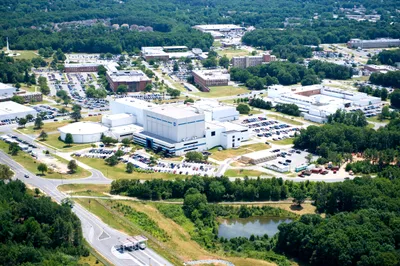
The work, anchored by NASA Langley Research Center in Hampton, Virginia, represents one of the most sustained and rigorous observational science efforts in the space age. Today, it remains the only program globally producing comprehensive Earth radiation budget data, making it an irreplaceable cornerstone of climate science infrastructure.
From Explorer 1 to CERES: A Timeline of Seeing the Invisible
The journey began long before modern climate consciousness. NASA's Explorer 1, launched in January 1958, orbited Earth over 58,000 times before burning up in the atmosphere—a brief but scientifically prophetic mission. By 1975, NASA deployed the Nimbus satellite, which achieved the first global, direct observations of solar radiation entering and exiting Earth's atmosphere. These early measurements helped validate the first generation of climate models and proved that tracking Earth's energy balance was not just scientifically possible but essential.
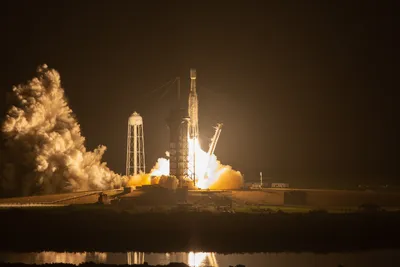
The real inflection point came in October 1984, when the Space Shuttle Challenger launched the Earth Radiation Budget Satellite (ERBS) carrying the Earth Radiation Budget Experiment (ERBE) instruments. Retired ERBE scientist Bruce Barkstrom recalled the launch with visceral clarity: the shuttle's exhaust was so luminous it lit the pre-dawn sky from beneath clouds, then reflected off those same clouds minutes later as the sun crested the horizon. The image captures why this work matters—we're tracking the planet's most fundamental energy flows, and occasionally, we see them with our own eyes.
ERBE operated for a decade, delivering unprecedented regional and global measurements of how clouds, ice, and the atmosphere itself regulate Earth's radiative balance. In the late 1980s, these satellites produced the first direct evidence that clouds—counterintuitively—cool the planet overall, a finding that revolutionized climate modeling. By 1997, ERBE's successor, the Clouds and Earth's Radiant Energy System (CERES), launched aboard the Tropical Rainfall Measurement Mission and has since flown on seven satellites across multiple space agencies, including NASA and NOAA partnerships.
Why This Matters: The Science Behind the Data
Understanding Earth's energy budget isn't an academic exercise. The delicate equilibrium between incoming solar radiation and outgoing thermal energy determines whether Earth warms or cools. Decades of continuous, stable, and accurate measurements—the kind only satellite networks can provide—feed into climate models and seasonal forecasts that inform policy makers and industry planners worldwide.
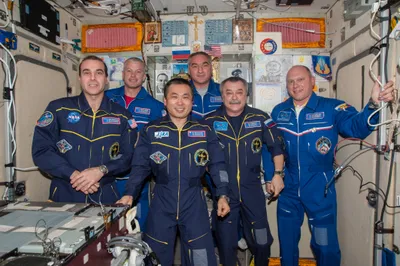
The technology has evolved dramatically. CERES instruments are described by Principal Investigator Kory Priestley as "probably the most accurate radiometry that NASA has flown." The latest addition, the Total and Spectral Solar Irradiance Sensor (TSIS)-1 aboard the International Space Station, measures the Sun's energy input with unprecedented precision, helping scientists isolate the Sun's natural influence on atmospheric circulation, clouds, and ozone from human-driven climate signals.
What's Next: The Never-Ending Search
The seventh and final CERES instrument activated in January 2018, representing the end of a generation. NASA Langley's team is already developing next-generation instruments to maintain the continuity this irreplaceable 42-year dataset demands. As Barkstrom reflected, "With Earth observations, you never complete your understanding." In observational science, absolute certainty is impossible—and that's precisely why we keep watching.