The Space Industry's Dirty Secret: Burning Satellites Are Reshaping Earth's Atmosphere
The satellite industry is expanding at a pace that may be fundamentally altering Earth's upper atmosphere in ways we're only beginning to understand. A new analysis from The Conversation warns that as mega-constellations like SpaceX's Starlink deploy thousands of massive satellites into orbit, the sheer volume of dead spacecraft burning up during atmospheric reentry could pose serious risks to climate, safety, and human culture—with little regulatory oversight currently in place.
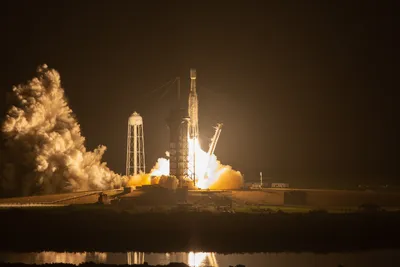
Nearly 15,000 active satellites now orbit Earth, with that number expected to grow to the millions within the next decade. Most belong to mega-constellations designed with service lives measured in just a few years. When these systems age, operators must launch replacements rapidly, creating a cycle of accelerating launches and reentries that is fundamentally reshaping orbital operations.
The Weight Problem: Bigger Satellites, Bigger Consequences
Perhaps the most overlooked variable in this expansion is satellite mass. Early-generation mega-constellation vehicles were relatively small. Today's Starlink V2 "mini" satellites weigh approximately 800 kilograms—equivalent to a fully loaded vehicle. Planned V3 variants will approach the mass of a commercial airliner.
This matters immensely. Larger satellites produce more debris upon reentry, release greater quantities of pollutants into the stratosphere and mesosphere, and their particles remain suspended in the atmosphere longer than smaller predecessors. When thousands of 1,200-kilogram spacecraft burn up annually instead of dozens of 100-kilogram ones, the atmospheric chemistry equation changes. Researchers warn that accumulated metallic particles could accelerate ozone depletion and potentially disrupt weather patterns in ways we cannot yet predict.
A 40 Percent Casualty Risk Per Five-Year Cycle
The ground risk is immediate and quantifiable. Not all reentering satellites fully ablate. Larger fragments survive atmospheric passage and strike Earth. Current modeling suggests a 40 percent probability of at least one casualty per five-year cycle from mega-constellation reentries alone—a calculation that climbs as constellation sizes expand.
This is no longer theoretical. SpaceX debris has already struck populated areas in Australia. As launch cadences accelerate and satellite mass increases, these incidents will multiply. The risk extends beyond civilians to aviation safety; aircraft operating at cruise altitude now share airspace with falling debris that neither pilots nor air traffic control can reliably track.
The Night Sky Casualty We Didn't Plan For
Meanwhile, astronomers and cultural heritage advocates warn of an invisible cost. Simulations show that millions of satellites will render the night sky artificial—thousands of visible objects replacing stars in the view available to naked-eye observers worldwide. For scientific astronomy, this degrades observational capability and wastes telescope time filtering out constellations. For indigenous cultures that have used stars for navigation, storytelling, and seasonal calendars for millennia, it represents permanent erasure of a heritage spanning human civilization.
The Regulatory Vacuum
No international framework currently governs atmospheric pollution from satellite reentry. No caps exist on constellation size. No penalties attach to operators who deploy massive satellites with poor deorbit planning. The industry is effectively running an uncontrolled experiment on Earth's upper atmosphere using the planet as a test subject.
What's Next
The research points to an urgent need for binding international agreements on satellite design standards, reentry protocols, and constellation size limits. Without intervention within the next 18-24 months—before mega-constellation deployments reach truly massive scale—atmospheric scientists warn we may lock in decades of unintended climate forcing from satellite reentry products. The question is no longer whether regulation will come, but whether it will arrive before the damage becomes irreversible.