
The ISS Era Ends; the Commercial Era Begins
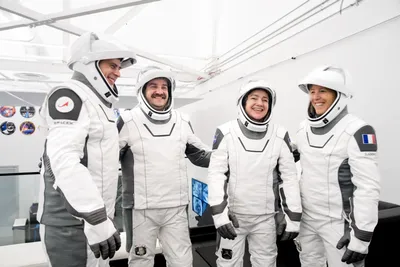
NASA has awarded back-to-back Private Astronaut Missions to Vast Space and Axiom Space, marking a decisive pivot in how America operates in low Earth orbit. Both companies will launch crewed missions to the International Space Station in 2027, ferrying four-person crews aboard SpaceX's Crew Dragon. But these aren't mere tourism flights—they're stepping stones. NASA is deliberately using the ISS's remaining operational years to nurture the companies that will replace it once the agency retires the station in 2030.
This strategy represents a fundamental shift in how government views space infrastructure. Rather than building and operating orbital facilities directly, NASA is contracting private companies to do the heavy lifting while maintaining scientific continuity and crew safety oversight. It's a calculated handoff, not an abandonment.
Two Paths to Commercial Orbit
Axiom Space brings veteran credibility to the mission. The company has already flown four crewed missions to the ISS, delivering 14 astronauts from 11 nations since 2022. Its fifth PAM mission will launch in January 2027. Meanwhile, Axiom is assembling its own multi-module commercial station at the ISS itself—a station that will eventually undock and become a free-flying facility. The company recently secured $350 million in fresh financing and has begun welding primary structures for its first module with partner Thales Alenia Space. Axiom is also building the AxEMU spacesuits for NASA's Artemis III lunar missions, cementing its role as a critical infrastructure provider.
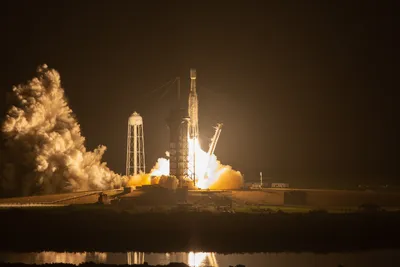
Vast Space is the newcomer with the bolder vision. Its 14-day PAM mission—launching summer 2027—will be Vast's first crewed flight and the first private astronaut mission by a company other than Axiom. More ambitiously, Vast is developing Haven-1, a single-module commercial station designed to launch atop a Falcon 9 in 2027. The company has completed cleanroom integration on Haven-1 and is conducting full-scale life-support testing at its Long Beach headquarters. A prototype, Haven Demo, launched in November 2025 and recently demonstrated a critical perigee-lowering maneuver—proof that Vast can control orbital decay and ensure safe deorbiting. Haven-2, Vast's nine-module flagship station, will require SpaceX's Falcon Heavy and Starship, but only if Vast secures additional NASA Commercial Low Earth Orbit Destination (CLD) funding.
Why This Matters Now
The ISS was designed for a 15-year lifespan; it has now operated for over 25 years. While it remains scientifically productive, NASA faces a choice: spend billions on life-extension upgrades or transition to a distributed network of smaller, cheaper commercial facilities. The CLD program, established in 2020-2021, funds Axiom, Vast, Blue Origin's Orbital Reef, Starlab Space's Starlab, and Northrop Grumman's unnamed station. Competition drives innovation and cost reduction.
These PAM awards also serve a practical purpose: they generate revenue for emerging commercial operators while they build their own stations. Vast and Axiom each receive NASA contracts for crew consumables, cargo, and storage. In return, NASA purchases cold-chain sample return capability—a service only available on crewed missions with onboard freezers.
Watch for Launch Windows
The 2027 launch corridor is critical. Axiom-5 flies first (January 2027), followed by Vast's inaugural crewed mission (summer 2027). Axiom's first commercial station module should reach orbit that same year, as will Vast's Haven-1. By 2028, the first commercial stations could be operational as the ISS enters its final operational chapter. The next two years will determine whether America's transition to commercial orbital infrastructure succeeds—or stumbles.