
NASA's Twin Spacecraft Will Map Mars' Atmospheric Death
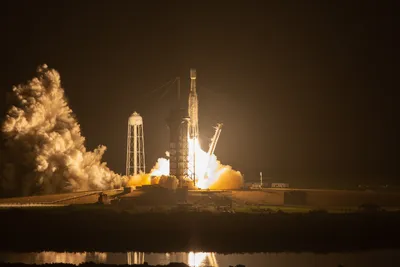
NASA's ESCAPADE mission has switched on its science instruments, marking the first operational phase of an unprecedented dual-spacecraft venture to understand how the Sun systematically stripped Mars of its once-habitable atmosphere. Launched November 13, 2025, aboard a Blue Origin New Glenn rocket, the two orbiters are currently looping around Lagrange Point 2—a gravitational waystation 1 million miles from Earth—before executing a gravity-assisted maneuver off our planet in November 2026 to reach Mars in September 2027.
The mission arrives at a critical moment for Mars exploration. While robotic rovers have mapped the planet's surface for decades, ESCAPADE represents the first coordinated two-spacecraft investigation of Mars' magnetosphere and the solar wind processes that have transformed the Red Planet from a warm, wet world into a frozen desert over billions of years. "Having two spacecraft is going to help us understand cause and effect," said Michele Cash, ESCAPADE program scientist at NASA Headquarters. This stereo perspective—simultaneous measurements from two vantage points—will reveal how the solar wind interacts with Mars' magnetic field and drives atmospheric escape in real time.
Why Mars Lost Its Atmosphere (And Why That Matters for Human Missions)
Mars once possessed a dense atmosphere and a robust global magnetic field capable of deflecting the Sun's relentless particle stream. Today, the Red Planet's magnetosphere is a patchwork: remnants of ancient crustal magnetism combined with a weaker, induced field generated by solar wind interactions with charged particles in the upper atmosphere. This "hybrid" magnetosphere provides minimal protection against solar radiation—a critical liability for future human explorers.
Understanding this process isn't merely academic. Before NASA sends astronauts to Mars, engineers must quantify radiation exposure on the surface and develop shielding protocols for habitats. ESCAPADE will also characterize Mars' ionosphere, the electrically charged upper atmosphere layer that future missions will rely on for radio communications and navigation systems. "If we ever want GPS at Mars or long-distance communications, we need to understand the ionosphere," said Rob Lillis, the mission's principal investigator at UC Berkeley.
A New Approach to Mars Trajectory
ESCADADE showcases a paradigm shift in deep-space mission planning. Traditional Mars launches required Earth-Mars orbital alignment—a constraint that restricted launch windows to every 26 months. By adopting a "loiter" orbit around Lagrange Point 2, ESCAPADE decouples launch timing from planetary mechanics, enabling missions to depart Earth almost on demand. During this extended loop, the twin spacecraft will traverse an unexplored region of Earth's distant magnetotail, approximately 1.2 million miles from our planet, collecting the first direct measurements of this region's plasma and magnetic field properties.
Technical Innovation: Stereo Magnetosphere Monitoring
Once in Mars orbit, ESCAPADE's dual-spacecraft architecture enables groundbreaking measurements. For the mission's first six months, the orbiters will follow identical orbital paths, passing over the same magnetic features at different times. This configuration allows detection of magnetosphere variations on timescales as short as two minutes—previously impossible with single-spacecraft missions. After six months, one spacecraft will climb to higher altitude while the other remains closer to Mars, enabling simultaneous upstream solar wind measurements and magnetosphere monitoring. "Prior spacecraft could either be in the upstream solar wind, or they could be close to the planet," Lillis noted. "ESCAPADE allows us to be in two places at once and measure the cause and the effect."
What's Next
The spacecraft will arrive at Mars in September 2027, initiating a multi-year science campaign timed to inform NASA's Human Exploration and Operations Mission Directorate planning for crewed missions. ESCAPADE's data will directly feed into radiation protection standards, landing site selection, and life support system requirements for Mars exploration. The mission's success could validate the Lagrange Point loiter trajectory as a standard approach for future deep-space missions, fundamentally reshaping how NASA schedules interplanetary exploration.