Europe's Ramses Mission Will Chase Apophis Through Earth's Cosmic Backyard
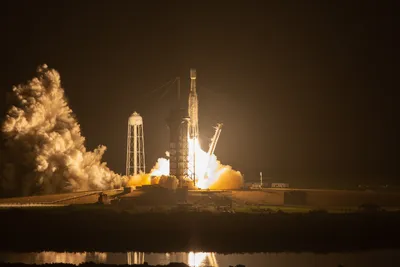
On February 10, 2026, the European Space Agency awarded OHB Italia a contract to build the Rapid Apophis Mission for Space Safety (Ramses)—a spacecraft designed to intercept and study the near-Earth asteroid 99942 Apophis as it makes one of the closest approaches to our planet in recorded history. Scheduled for launch in 2028, Ramses will arrive at Apophis in time to collect detailed scientific data during the asteroid's April 2029 flyby, when it will pass within 32,000 kilometers of Earth—closer than geostationary satellites and well inside the Moon's orbital distance.
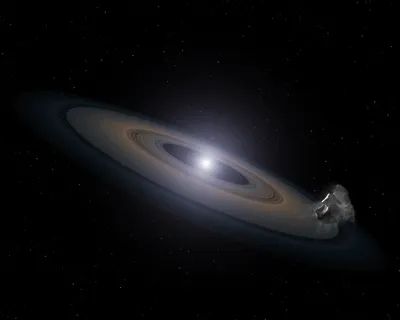
This is not a speculative mission. Apophis is a real asteroid, roughly 370 meters across, whose orbital mechanics and Earth-intersection have been precisely calculated. What makes Ramses historically significant is the opportunity it represents: a well-funded, internationally coordinated spacecraft will be present as a potentially hazardous object swings through our cosmic neighborhood. The data collected will fundamentally advance planetary defense science and asteroid characterization—knowledge that will be essential if humanity ever faces a genuine impact threat.
Why Now, Why Apophis?
Near-Earth objects like Apophis have been part of the astronomical landscape for billions of years, but only in the past two decades have space agencies begun treating close approaches as legitimate scientific opportunities rather than purely defensive scenarios. The 2029 Apophis flyby represents a rare convergence: an object large enough to study meaningfully, approaching close enough for detailed observation, with sufficient warning time to mount a proper mission.
ESA's decision reflects a broader shift in planetary defense strategy. Rather than waiting for a crisis, space agencies are building the observational and technological capability to understand potentially hazardous asteroids in detail. Missions like Ramses generate data that informs impact probability calculations, material composition models, and theoretical deflection strategies. Japan's Hayabusa2 and NASA's OSIRIS-REx demonstrated the scientific payoff from close-range asteroid study; Ramses will extend that model to a dynamically significant object with a non-zero historical impact probability.
Mission Design: Small Satellites, Big Science
Ramses will deploy multiple CubeSats during the encounter, including one named "Farinella" in honor of the late Italian planetary scientist Paolo Farinella. These small satellites—some weighing as little as a few kilograms—will gather data from multiple vantage points, allowing scientists to construct a comprehensive picture of Apophis's physical properties: surface composition, internal structure, rotation dynamics, and gravitational field.
JAXA's contributions include solar arrays and a thermal infrared imager, underscoring the mission's international scaffold. OHB Italia, with decades of heritage in complex space systems, leads the primary spacecraft development. This collaboration model—European prime contractor, Japanese subsystems, Italian CubeSat manufacturer—has become standard in planetary science and reflects both the distributed expertise across space-faring nations and the economic reality of cost-sharing for ambitious projects.
What's at Stake
Ramses launches in approximately two years. Success means a high-fidelity dataset on a near-Earth asteroid at closest approach—the kind of information that accelerates impact-risk modeling and validates deflection-strategy simulations. Failure means a missed window that won't recur for centuries. For the planetary defense community, the stakes are both scientific and existential.