
GomSpace Breaks into Profitability as European Smallsat Market Heats Up
Danish smallsat manufacturer GomSpace delivered a watershed financial performance in 2025, posting 72% revenue growth to 442 million Swedish krona ($49 million USD) while achieving positive EBIT—a rare feat in a sector where competitors still operate in the red. The milestone marks the company's transition from growth-at-any-cost mode to sustainable, profitable expansion, a inflection point that signals both internal operational maturity and surging industry demand for compact satellite solutions.
CEO Carsten Drachmann characterized the results as "our first year of significant profitable growth," emphasizing that GomSpace's performance significantly outpaced industry averages where peers remain unprofitable. The company, listed on Nasdaq Stockholm, disclosed financials on February 19, 2026, with revenue coming in at the high end of its own guidance—a signal of operational discipline and conservative forecasting.
A Growing Backlog Fuels Forward Momentum
GomSpace's confidence in sustained growth is grounded in operational reality: the company's order backlog grew 13% year-over-year to 410 million Swedish krona ($45 million USD), representing roughly 11 months of forward revenue visibility at current production rates. This backlog provides crucial insulation against market volatility and gives management concrete justification for projecting 30% revenue growth at the midpoint for 2026.
The company's timing is fortuitous. The global space industry is experiencing a structural shift driven by dual forces: private capital acceleration (led by mega-constellation buildouts and commercial space station demand) and governmental urgency around space-based security and sovereignty. European nations, in particular, are prioritizing indigenous smallsat capabilities to reduce dependency on U.S. launch and manufacturing infrastructure—a geopolitical tailwind that favors GomSpace's Denmark-based operations.
The Cash Flow Wrinkle
One notable shadow on the results: a major customer is delayed in payment by more than 145 million Swedish krona ($16 million USD) due to postponed capital fundraising. While GomSpace has secured collateral and negotiated a structured payment plan, this represents a material working capital headwind—roughly one-third of annual net revenue held in outstanding receivables. The arrangement highlights a recurring friction point in smallsat supply chains where customers (often well-funded but cash-constrained startups) experience capital raise delays that ripple upstream to manufacturers.
GomSpace's ability to absorb this without materially impacting guidance suggests a solid balance sheet and disciplined cash management, but it's a risk factor worth monitoring through 2026 resolution.
What's Next
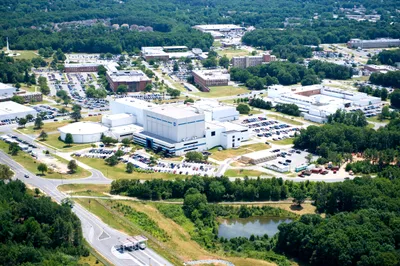
With the 2026 guidance in place, GomSpace faces straightforward execution priorities: fulfilling backlog on schedule, maintaining manufacturing margins amid potential supply-chain volatility, and capturing incremental orders as ESA, national space agencies, and commercial constellation operators finalize budgets. The company's cleanroom and manufacturing footprint (visible in recent facility photos) will be the constraint—scaling production without parallel capex expansion is the classic growth inflection challenge.
Investors and industry watchers should monitor GomSpace's 2026 interim results (expected mid-year) as an indicator of whether government and commercial demand is genuinely accelerating or whether the backlog growth reflects one-time orders. Equally important: tracking when that $16 million payment resolves, as timely collection would signal customer viability and strengthen GomSpace's working capital position entering 2027.