
Four Astronauts Arrive at ISS Following January Medical Crisis
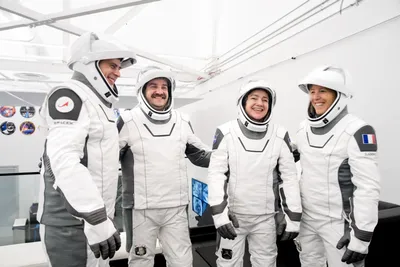
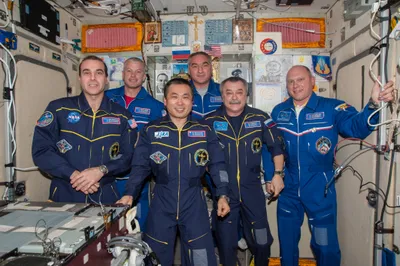
The International Space Station welcomed four new crew members on February 14, 2026, restoring full operational capacity after a January medical emergency forced an unprecedented evacuation. The arrival of NASA astronauts Jessica Meir and Jack Hathaway, France's Sophie Adenot, and Russia's Andrei Fedyaev marks a critical milestone in stabilizing ongoing research operations aboard humanity's orbital laboratory.
This crew rotation comes just weeks after NASA executed its first medical evacuation in the agency's 65-year history of crewed spaceflight—a sobering reminder that the ISS, despite decades of operational refinement, remains a high-risk environment where human health can deteriorate rapidly. In early January, one astronaut aboard the station developed a serious medical condition requiring immediate evacuation. Rather than attempt treatment in microgravity, mission control authorized the evacuation of that crew member plus three others, leaving the ISS temporarily staffed with only three astronauts and forcing the postponement of critical spacewalks and research activities.
A Watershed Moment for Space Operations
The January evacuation represents a pivotal inflection point in ISS operations. While medical emergencies have occurred during long-duration spaceflights before—Russian cosmonaut Valentin Lebedev famously suffered severe decompression sickness aboard Mir in 1989—this marks the first time NASA has had to execute a full crew evacuation response in its modern spaceflight era. The incident exposed vulnerabilities in the station's staffing model and prompted rapid reassessment of contingency protocols across all partner agencies: NASA, Roscosmos, ESA, and JAXA.
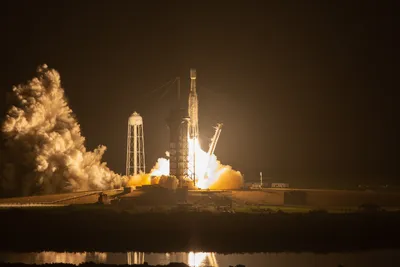
Pre-flight medical screening, while rigorous, cannot predict all in-flight health complications. Long-duration microgravity exposure introduces physiological stressors—fluid shifts, bone density loss, cardiovascular deconditioning, and immune suppression—that compound over weeks and months. The incident underscores why the ISS operates on a 6-person minimum crew model and maintains strict rotation schedules. It also explains NASA's investment in rapid-turnaround crew launch systems like SpaceX's Crew Dragon, which can reach the station within 24 hours of launch.
The New Team Brings Diverse Expertise
The four arriving astronauts represent a constellation of specialization. Jessica Meir, making her second ISS flight, is a marine biologist who participated in the first all-female spacewalk in 2020 and has conducted extensive research on how microgravity affects living systems. Jack Hathaway, a U.S. Navy captain, brings command-level experience and leadership credentials essential during operations under stress. Sophie Adenot, France's second woman in space, is a military helicopter pilot whose aeronautical background adds critical systems expertise for maintaining the station's complex hardware. Andrei Fedyaev, a former Russian military pilot with prior ISS experience, provides continuity in Russian segment operations and redundancy in critical piloting and technical skills.
This composition reflects the ISS's fundamental model: international cooperation where each agency contributes specialized talent. The station's complexity—with American, Russian, European, and Japanese modules operating under different protocols—demands crews with overlapping expertise and cross-training.
What Comes Next
The restored crew will immediately resume postponed research activities across biology, physics, materials science, and technology development. Spacewalks, which are among the station's highest-risk activities, will resume on a controlled schedule. Mission planners will continue analyzing the January evacuation to refine emergency protocols and ensure rapid crew rotation capabilities remain robust. The incident also likely accelerates development of on-orbit medical diagnostics and telemedicine capabilities to identify emergencies earlier and support treatment decisions in real time. For the broader spaceflight community, this moment reinforces a hard lesson: pushing deeper into space requires not just better technology, but better foresight about human vulnerability.