
The Private Space Station Era Just Got Real
NASA has selected Vast, a California-based aerospace company, to conduct the sixth private astronaut mission to the International Space Station, with launch targeted for summer 2027. The move signals accelerating confidence in commercial spaceflight operators and reflects a fundamental restructuring of human spaceflight architecture: the agency is actively retiring from the role of sole space station operator.
This isn't hyperbole. NASA's decision to hand mission slots to private companies isn't about cost-cutting nostalgia—it's about an intentional, decades-in-the-making transition to a commercially operated low Earth orbit economy. The ISS, operational since 1998, has a finite lifespan. Rather than replace it with another government-built facility, NASA is strategically funding private sector alternatives while the ISS still operates, creating a continuous crewed presence in orbit as the station is eventually deorbited (currently planned for the early 2030s).
Why Vast, Why Now
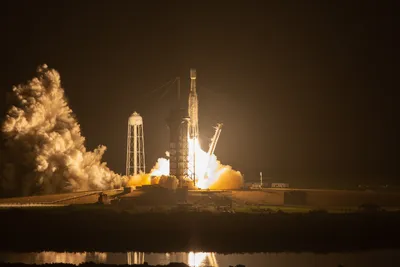
Vast's selection matters because the company is still a relative newcomer to human spaceflight. Founded by CEO Max Haot, Vast successfully launched its Haven Demo spacecraft aboard a SpaceX Falcon 9 in 2025, making it, according to the company, the only operational commercial space station company with its own crewed vehicle currently in orbit. That's a narrow claim, but it carries weight: the company has proven it can execute hardware in the most unforgiving environment humans operate in.
The ISS mission itself—a two-week crewed flight—serves as both a real-world training ground and a validation checkpoint for Vast's larger ambitions. The company's long-term goal is developing Haven-1, its own commercial space station. The first module is slated for 2027, with a permanent human presence target of 2030. That timeline is aggressive. For context, the ISS took over a decade to assemble, and it was built by the world's most established space agencies working in concert.
Vast's strategy is different: modular construction, commercial funding, and incremental crewed operations. The ISS mission provides critical data on human factors, life support optimization, and operational workflows that no simulation can fully replicate.
The Broader Competitive Landscape
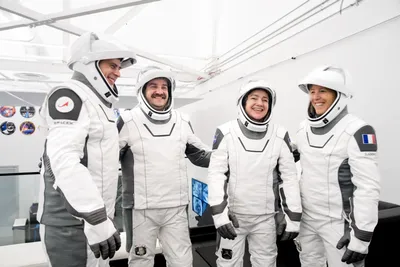
Vast isn't alone in this race. Axiom Space, the more established player, has completed four private astronaut missions to the ISS since 2022 and is preparing its fifth for early 2027. Axiom has pivoted from flying wealthy space tourists toward government-sponsored astronauts from nations including India, Hungary, and Saudi Arabia—a more sustainable revenue model that builds diplomatic relationships alongside commercial space access.
The two companies represent different paths: Axiom is building commercial modules that will eventually attach to the ISS as it transitions into a hybrid public-private facility. Vast is building a standalone station. Both approaches are being funded, which suggests NASA's strategy isn't ideological—it's about hedging. If one company faces technical setbacks or funding issues, alternatives exist.
This redundancy in commercial human spaceflight was unthinkable a decade ago. It's now NASA policy.
What Happens Next
Watch for two critical milestones: Axiom's fifth mission in early 2027 (which will provide real-world performance data for a competing commercial operator) and Vast's ISS mission in summer 2027. Both will inform whether commercial operators can sustain safe, frequent crewed operations without government bailouts.
The deeper question isn't whether Vast or Axiom will succeed individually—it's whether the commercial space station market can support multiple operators simultaneously. That answer will reshape human spaceflight for the next 30 years.