Texas Launch Company Targets February 27 for Critical Comeback Mission
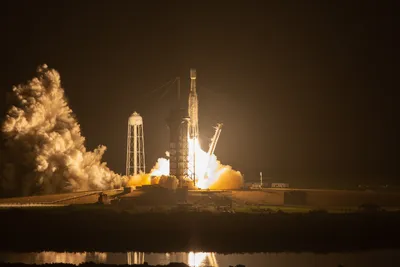
Firefly Aerospace is preparing to dust off its Alpha rocket after a bruising 10-month hiatus forced by critical failures. The Texas-based company has scheduled the "Stairway to Seven" mission for February 27, marking the vehicle's return to the launch pad and a pivotal moment for the company's credibility in the commercial space sector.
The stakes are high. Alpha's last two test flights ended in failure—most recently a combustion event in September 2025 that halted operations and triggered a complete investigation. Firefly traced the culprit to a process error during stage-one integration that left microscopic hydrocarbon contamination on critical engine components. It's the kind of lesson learned in the most expensive way possible, but it's also the kind of root cause that, once identified, tends to stay fixed.
A Snapshot of Recovery in Progress
Alpha is a small-to-medium-lift launch vehicle designed to compete in the crowded commercial satellite market. At 96.7 feet tall and powered by four Reaver engines, it represents Firefly's bet that there's still room for mid-sized players in an industry increasingly dominated by SpaceX and emerging competitors. The company has positioned Alpha as a cost-effective, reliable alternative—assuming it can actually complete a successful flight.
The upcoming test flight carries significant symbolism. Originally slated to carry a Lockheed Martin payload, Firefly has switched to a company-controlled "demo payload" configuration for this mission. This is a practical decision: it removes external pressure and lets Firefly focus purely on validating the rocket's systems without the complications of a paying customer's hardware on the line. Think of it as the aerospace equivalent of a dress rehearsal—critical feedback without the Broadway lights.
Engineering Forward
The "Stairway to Seven" mission serves a dual purpose. First, it will validate Alpha's block I configuration—the current baseline design that has proven troublesome. But success here opens the door to Alpha Block II, scheduled for Flight 8. Block II represents a meaningful engineering evolution: the rocket will grow seven feet taller (to 103.7 feet), incorporate carbon composite components for weight savings, feature upgraded thermal protection, enhanced avionics, and more robust power systems.
These aren't cosmetic changes. Carbon composites reduce structural weight while maintaining strength, directly improving payload capacity. Enhanced avionics and power systems address the kinds of integration and reliability issues that plagued recent flights. Block II is positioned as the version that transforms Alpha from "promising startup rocket" to "production-ready launch vehicle."
For context, the commercial launch industry has learned hard lessons about the cost of failure. SpaceX spent billions and suffered multiple Falcon 9 losses before achieving reliability. Relativity Space, Axiom Space, and others are navigating similar development curves. Firefly's willingness to redesign after failures—rather than patch cosmetically—suggests institutional maturity.
What Comes Next
If February 27 succeeds, Firefly will have demonstrated not just engineering competence but manufacturing discipline. Block II development will accelerate, with manufacturing scalability improvements aimed at supporting both commercial and government payload manifests. Failures matter, but recovery matters more—and the industry is watching to see if Firefly can actually achieve it. Success on this mission resets the narrative; failure risks becoming a permanent mark against the company's technical credibility.